We all see the city’s problems. What could we change?

Seeing a problem is a beginning Daily journeys reveal congestion, uncomfortable pavements, neglected spaces and needs that remain unanswered. Lived experience can provide a close understanding of a place. Change begins when noticing leads to a question about how the situation could work better.
Problems can also reveal possibilities A well-placed crossing, shade, somewhere to rest or a new use for a small plot may be valuable without becoming a large construction project. Attention to everyday details can be as relevant as the size of an intervention.
Define the difficulty before choosing the answer Traffic may involve the location of services, transport choices and land use, rather than road width alone. An empty park may lack a comfortable entrance, lighting, seats or activities. An unused square may offer little shade or feel dominated by vehicles. Looking carefully helps separate an observable symptom from the need underneath it.
Turn a complaint into an inquiry Instead of stopping at the observation that a street is crowded, ask why so many journeys depend on cars. Instead of assuming a square is unwanted, ask what makes people reluctant to stay. Instead of treating missing greenery as an unchangeable condition, look for places that might accommodate it.
Understand connected systems Transport choices, building patterns, energy use and public space affect one another. A narrow solution can overlook those relationships. Consider walking, cycling and public transport alongside the services people need to reach, rather than treating every journey as a separate problem.
Include the people facing barriers Ask whether a place works for children, older people, disabled people and people without cars. A pavement that cannot accommodate a wheelchair or a long route without resting places can exclude residents from ordinary opportunities. Fair access belongs at the centre of an urban idea.
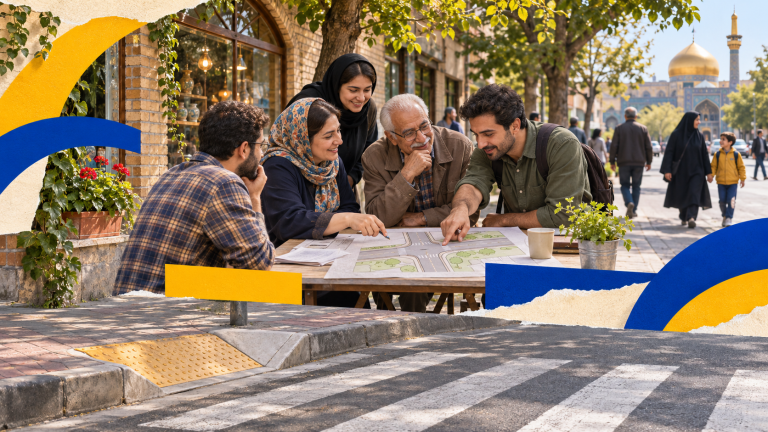
Public life includes stopping People need places to sit, talk, play and spend time as well as routes to move along. Squares, parks and modest shared spaces can support these experiences. Users, traders and local families can explain details that are missing from a formal map.
Combine criticism with a proposal Criticism identifies what needs attention; an inquiry explores causes; a proposal sets out something that could be tried. Designers, managers, businesses and residents can develop a more complete picture together. A temporary, limited trial may help reveal whether an approach is useful before it is expanded.
Let the city learn Changing needs can make an older decision unsuitable. Revisiting a route, reassessing a public place or acknowledging an unsuccessful intervention is part of improvement. Success can be considered through safer access, comfortable presence and better everyday moments, rather than expenditure or area alone.
No one needs an answer to every urban difficulty. A precise observation, a useful question and an invitation to discuss one local need can open a practical path. Which problem do you see closely enough to begin developing an idea?
KEEP THE CONVERSATION GOING
Choose a challenge and share an idea →Share your idea with us
Start with your experience and develop a proposal for a city challenge.


 English
 Persian