Shahr Naghshafarin: From Residents’ Experience to Urban Solutions
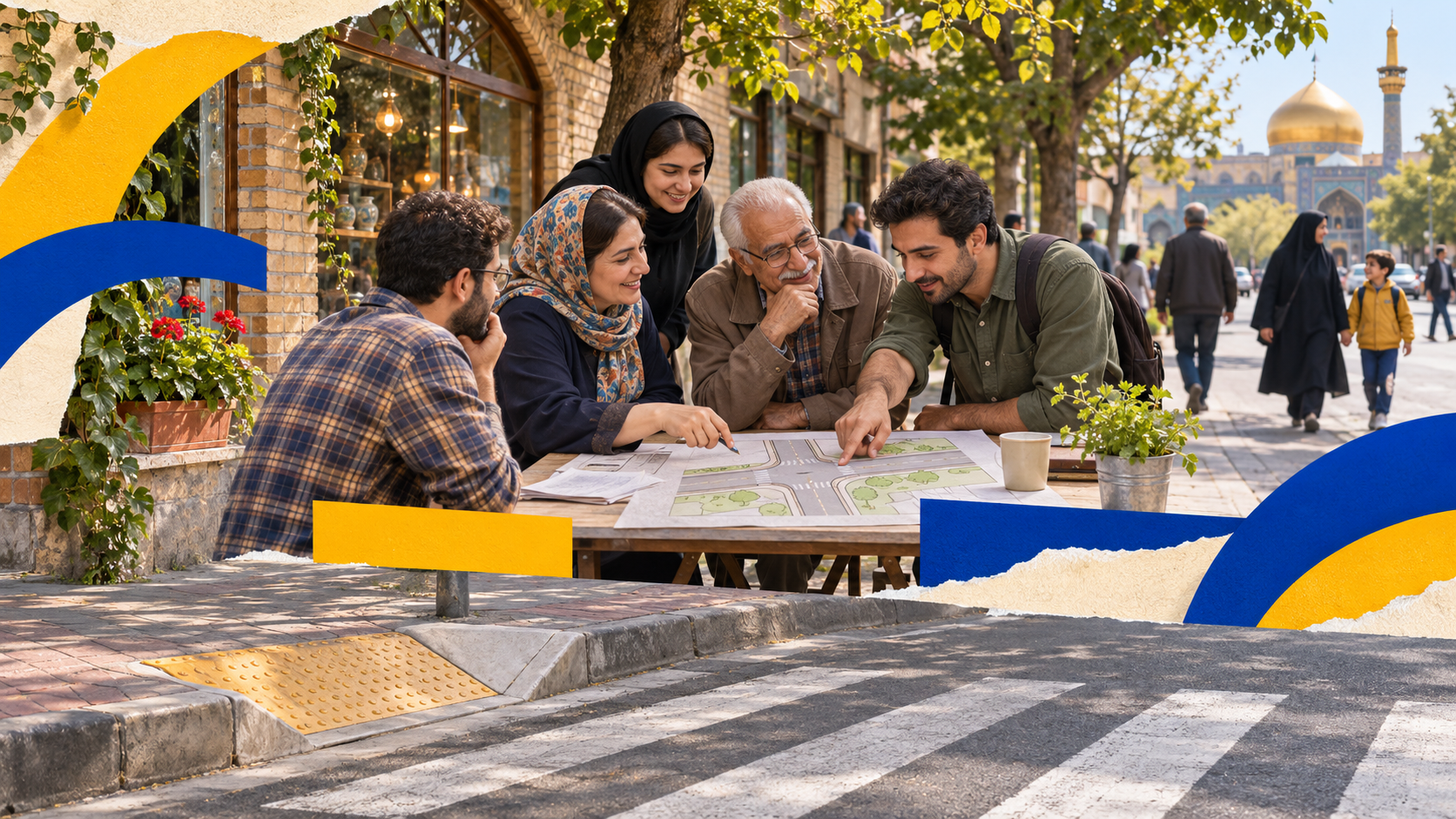
People who walk down a street every morning know details that never appear on a map. They know which corner gets crowded at school dismissal, where parked cars block pedestrians’ view, and which route a parent can take with a stroller. Those details can inform a city decision.
Start with a specific situation
Suppose several people say it is hard to cross the street by a school. Before proposing a signal or a marked crossing, ask exactly where and when the difficulty occurs and who faces it most often. A student, a shopkeeper and a wheelchair user may each reveal a different part of the problem.
Look at the problem together
If the main problem occurs at school dismissal where parked cars block pedestrians’ view, that changes how we define it. Designers and city officials can assess options with the people who use the route. Residents’ experience shows where to look. Fieldwork helps establish what can change and how it might affect others.
Report back to the people who spotted the problem
If the city is considering changes to parking or the crossing location, residents should know what is proposed, who is reviewing it and where the outcome will be shared. After a change, return at the same time of day and ask whether crossing is easier or whether the problem has moved elsewhere.
At Shahr Naghshafarin, you can start at this scale. Choose one of the city challenges that affects your daily life. In the idea submission form describe what you observed, who is affected and the first change worth exploring.
Share your idea with us
Start with your experience and develop a proposal for a city challenge.

 English
 Persian